Guide
How drying works after water damage
Drying is controlled, not just fast. The aim is to bring each material back to its normal moisture level.
Connects you with an independent restoration contractor.
The tools and what each one does
A moisture meter is the starting point. It reads dampness inside drywall, wood and subfloor so the plan is based on measurements.
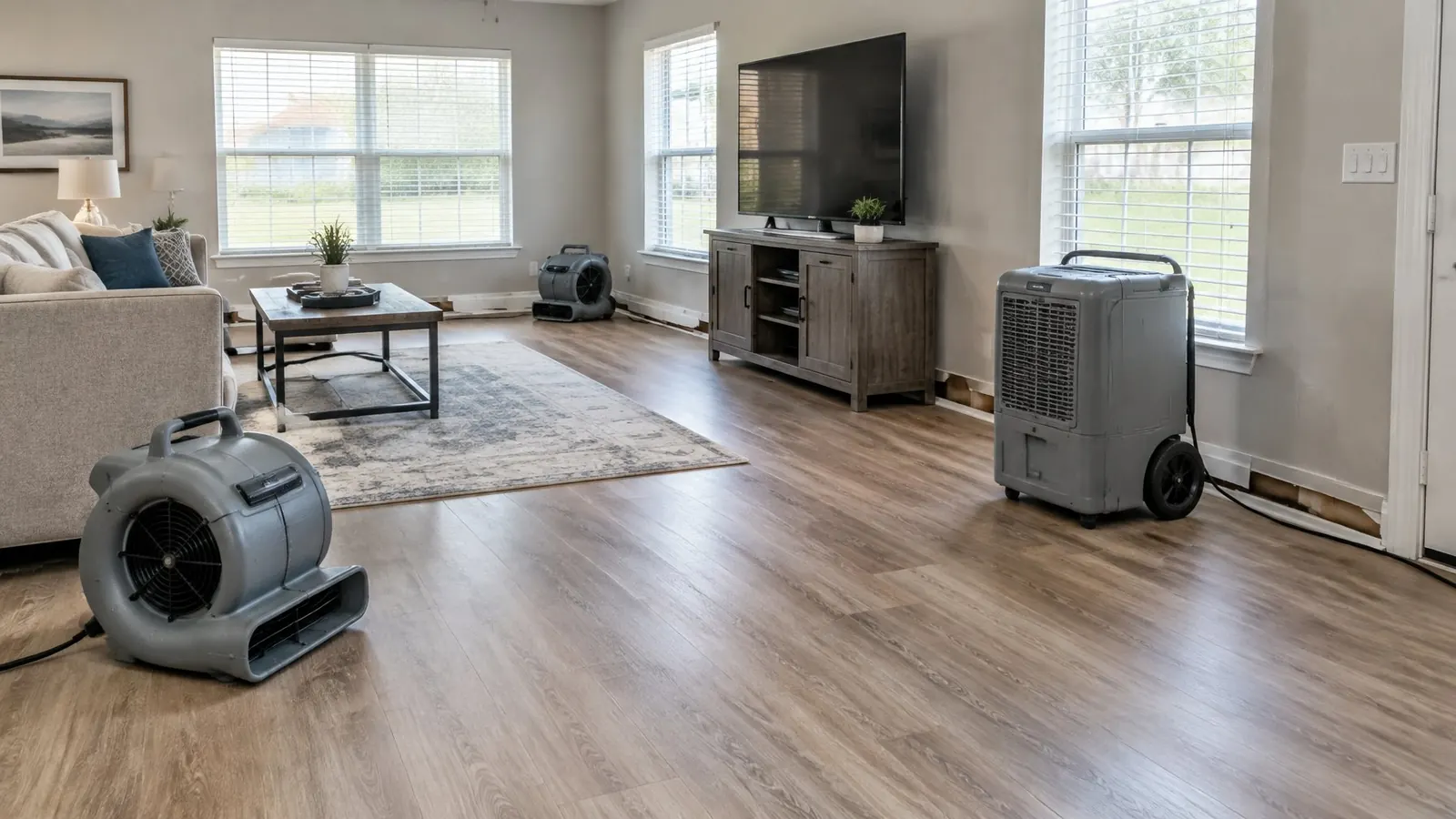
Air movers are low, loud fans that push air across the wet surface. Dehumidifiers pull the water out of that air. Used together, they let wet materials release moisture without raising humidity in the room.
Cavities behind walls are dried through small openings or by removing baseboards. Insulation that soaked up water often has to come out.
Why readings repeat
Moisture moves. A reading that is dry today can climb if the cavity behind it is still wet. Contractors return to check and remove equipment only when readings are normal.
What stays and what goes
Drywall that has been soaked from below may be cut at a line above the water mark. Wet carpet pad is usually discarded. Hard flooring often depends on how long it was wet. The contractor makes the call after measuring.
What it means for your claim
Written moisture readings and photos are the record that supports what was removed and why. Ask for them and pass them to your adjuster.
The numbers a contractor watches
The EPA says water-damaged areas and items should be dried within 24 to 48 hours to prevent mold growth, and that porous materials such as ceiling tiles and carpet may have to be thrown away if they become moldy.
On humidity, the EPA suggests keeping indoor relative humidity below 60 percent, and ideally between 30 and 50 percent. A humidity meter is the tool for that.
The EPA also warns that mold can hide on the back of drywall, the top side of ceiling tiles and the underside of carpets and pad. It says not to paint over moldy surfaces. Paint applied over them is likely to peel.
Things you can do while you wait
The EPA lists simple measures that cut moisture in the air: run the bathroom fan or open a window when showering, use exhaust fans while cooking or running the dishwasher, and vent a clothes dryer outdoors. Opening doors and windows and running fans can add air movement when the weather allows.
If condensation appears on windows or walls, the EPA says to dry the wet surface and reduce the moisture source.
Water is still moving. Call now.
One call connects you with an independent restoration contractor who serves the Kyle area. Then you decide what happens next.