Flash flooding
Flash flooding in Kyle, Texas
Kyle sits in creek country. A heavy rain can fill low areas fast, and a floodwater loss is treated differently from a pipe leak.
Connects you with an independent restoration contractor.
What Kyle has recorded
The City of Kyle says the October 2015 flood dropped 17 inches of rain on the city in about a day and calls it about a 500 to 700-year flood. The city created its stormwater utility afterward and began billing for it in January 2017.
The city also lists five dams inside Kyle and asks residents to check whether they sit in a potential inundation area. The city reports no current risk of dam failure.
Getting alerts
The city points residents to WARN Central Texas for phone and email alerts, to the Hays County Office of Emergency Management's water crossing and dam map, and to HaysInformed.com for road closures.
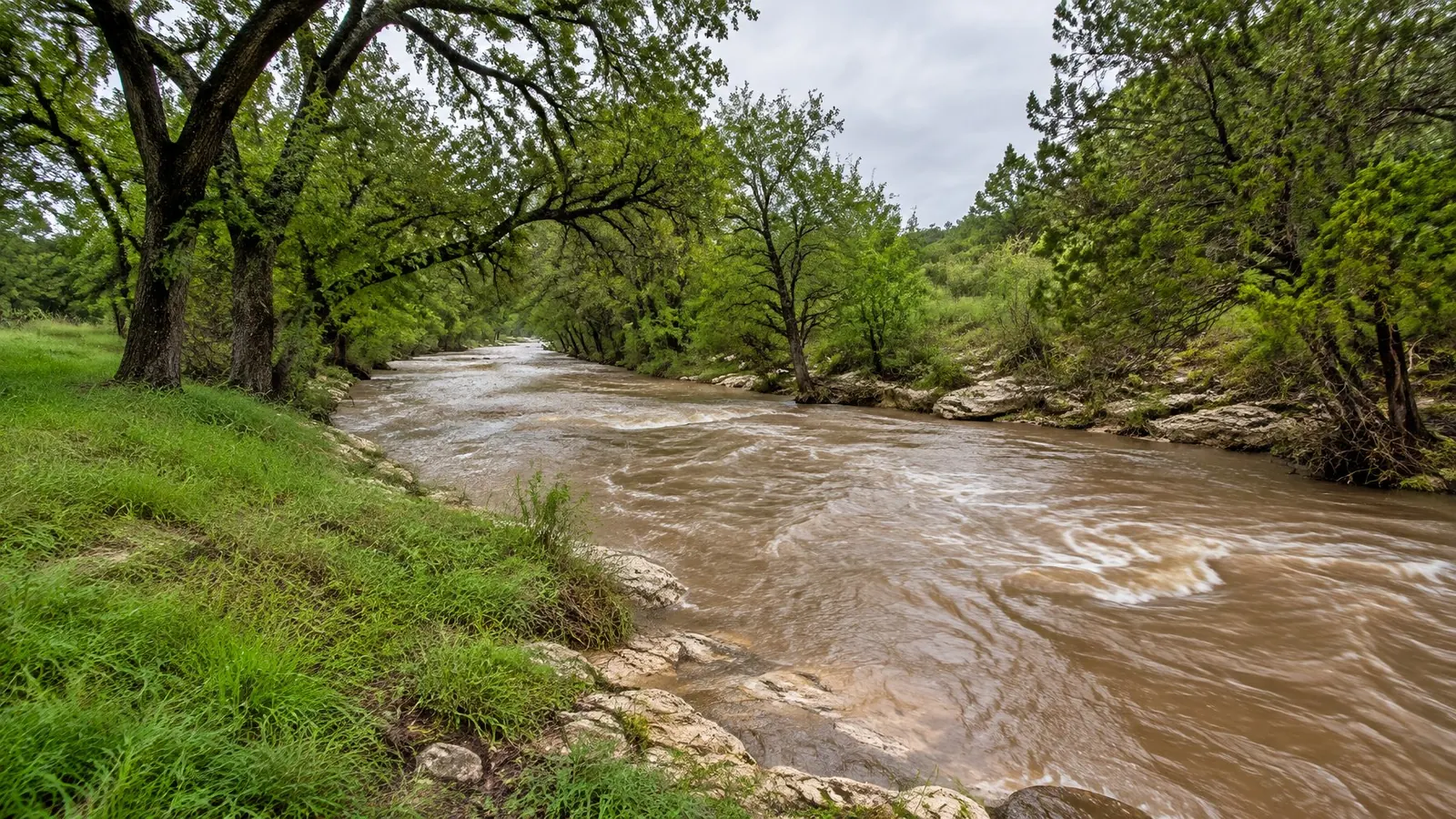
Do not drive into it
The National Weather Service says six inches of fast-moving water can knock over an adult, twelve inches can carry away most cars, and two feet can carry away SUVs and trucks. It says it is never safe to drive or walk into flood water.
Signs that water is entering the house
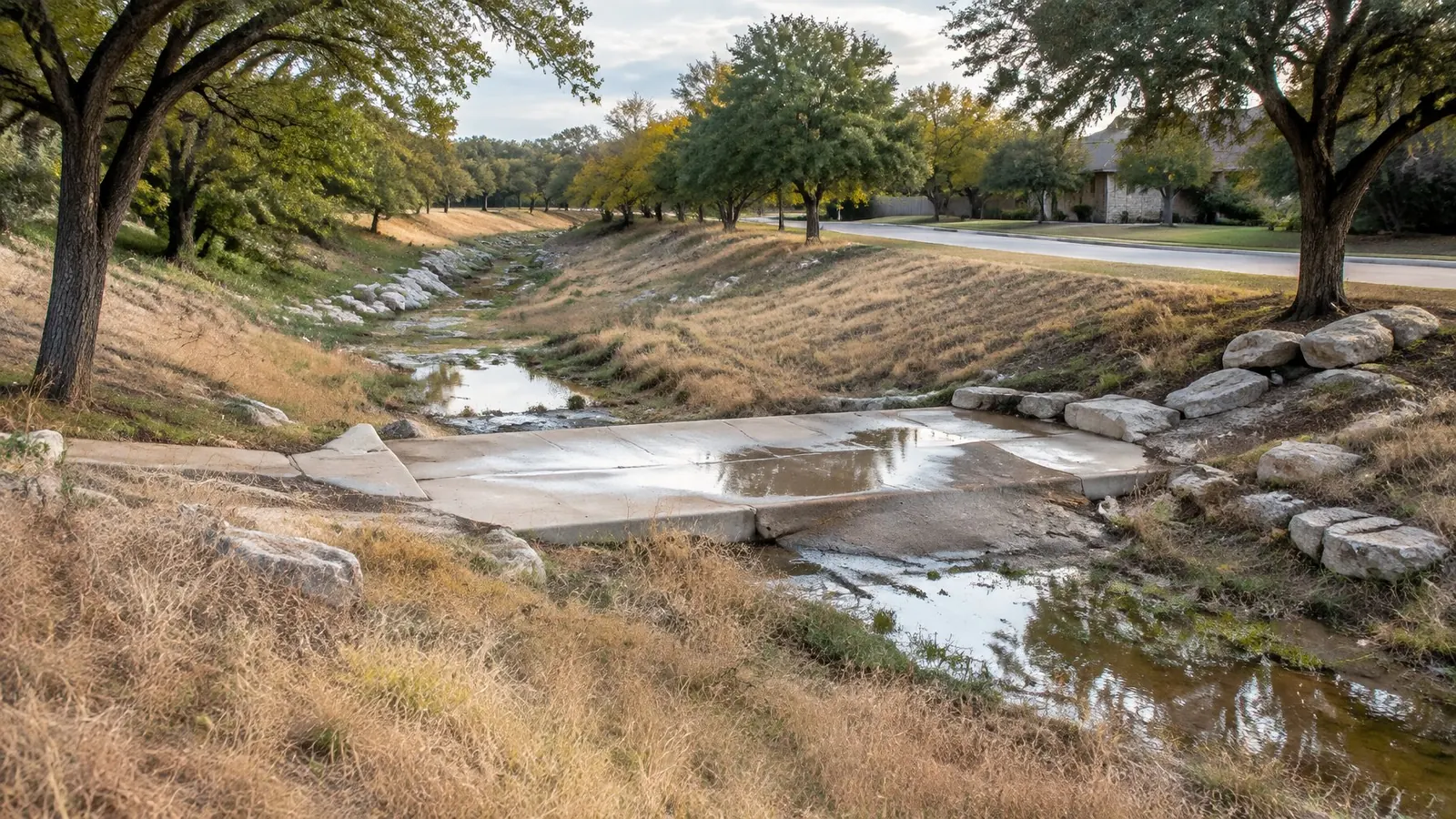
Flood water often arrives slowly at the doors and fast in the yard. Watch the places water meets the house.
- Water pooling against a slab edge or garage door.
- Water under an exterior door or through a garage threshold.
- A drain in the floor or a toilet gurgling or backing up, which can mean the sewer line is overloaded.
- A damp line rising on a wall inside from the floor.
What to do while you wait
Safety comes before cleanup. Do not walk through standing water that may touch outlets or an appliance. Pedernales Electric Cooperative tells customers to stay at least 50 feet from a downed line, if it serves your address.
Photograph the high-water line on walls and furniture. Move valuables up if you can do it safely. Keep children and pets out of the water, since flood water carries sewage and soil.
Do not run the central air system until the equipment has been checked if water reached the outdoor unit or the air handler.
Flood and your insurance
Standard homeowners policies do not cover flood, according to the Texas Department of Insurance. Flood coverage is a separate policy, and TDI says flood policies usually carry a 30-day waiting period, so it has to be bought before the storm.
Mold that follows a flood is not covered by a home policy either, because the flood itself is not.
Floodwater carries sewage, soil and chemicals. Treat everything it touched as contaminated and ask the contractor how it will be handled.
What a contractor usually does
Flood water that entered from outside is treated as contaminated. The work starts with removing the water, then removing porous materials such as carpet, pad, insulation and drywall that soaked it up.
Hard surfaces are cleaned and disinfected, and the structure is dried before anything is rebuilt. Scope matters more than speed here, so ask for it in writing.
After the water goes down
Expect the cleanup to take longer than a pipe leak, because more has to come out. Keep records of what was removed.
Check whether your address is mapped in a flood zone. The page on flood zones and maps around Kyle explains where the official maps are.
Common questions
Where do I see road closures?
The City of Kyle points residents to HaysInformed.com for closures and to the Hays County Office of Emergency Management's water crossing and dam map.
Who warns people about the dams?
The city directs residents to WARN Central Texas for alerts. The city also asks you to check whether your home is in a potential inundation area, which its dam safety page explains.
Can I clean up flood water myself?
Treat it as contaminated. The EPA tells homeowners to call a professional experienced with sewage and other contaminated water, and flood water can carry both.
Water is still moving. Call now.
One call connects you with an independent restoration contractor who serves the Kyle area. Then you decide what happens next.