Water extraction and drying
Water extraction and drying in Kyle, Texas
Extraction removes the water you can see. Drying removes the water you cannot. Both are needed before repairs start.
Connects you with an independent restoration contractor.
Why surfaces that look dry are not
A wall can feel dry to the hand and still hold moisture inside the cavity. A moisture meter pressed into the surface reads what the eye misses. Contractors map readings across a room, then repeat them over several visits.
Hardwood, laminate and carpet pad each take on and release water differently. Pad is often discarded. Solid wood may sometimes be dried in place with the right equipment, but that call belongs to the person looking at the floor.
- Water extraction: pumps and wet vacuums remove standing water.
- Air movers: fans that push moving air across wet surfaces.
- Dehumidifiers: machines that take moisture out of the air so surfaces can keep releasing water.
- Cavity drying: small holes or removed baseboards let dry air reach the space behind a wall.
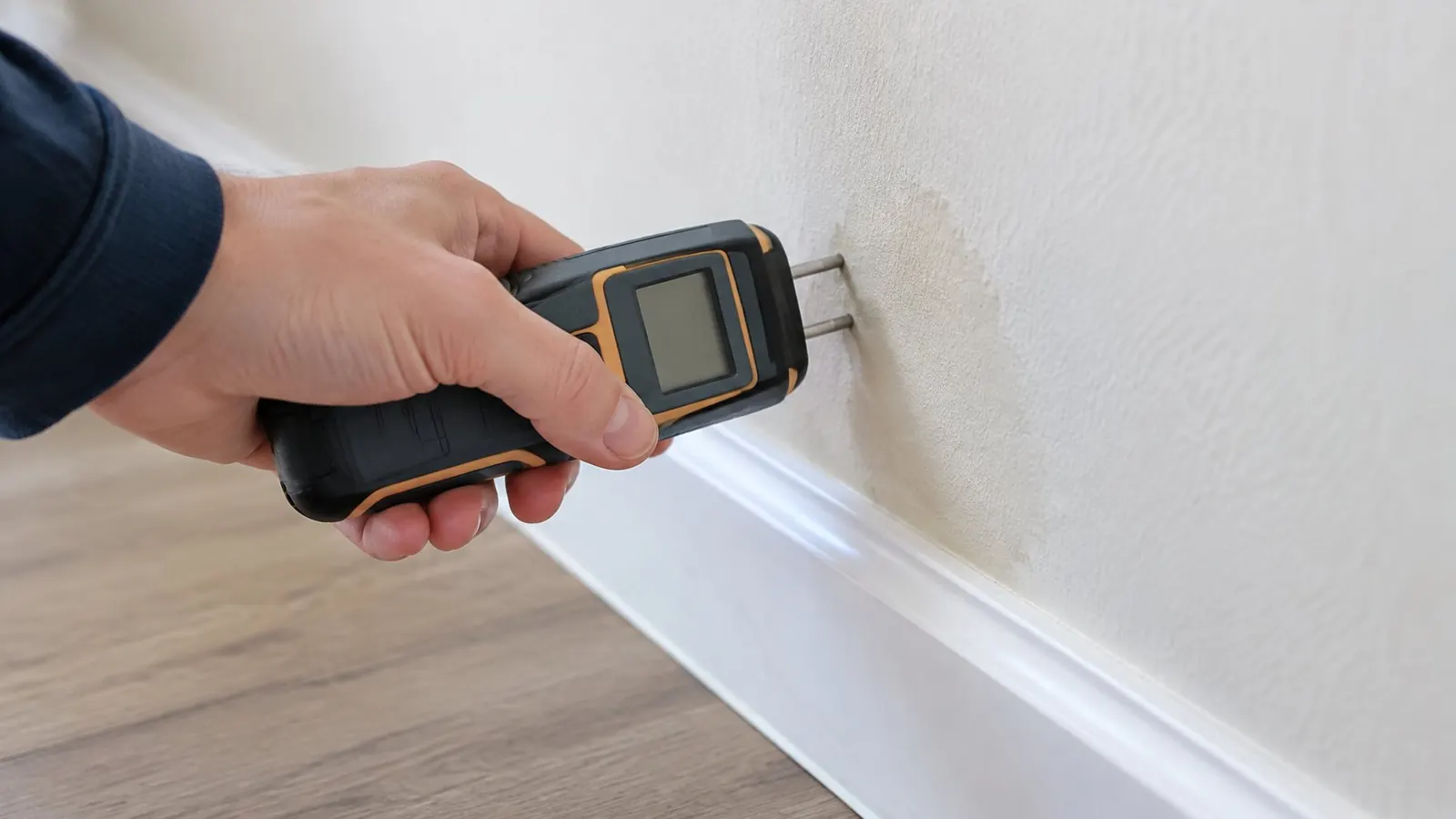
Signs you need extraction and not just a mop
A few cups on a tile floor can be wiped up. Water that has reached carpet, pad, baseboards or a wall needs more than towels, because it keeps moving after the surface looks clear.
Signs the water has gone into the structure include a squelch underfoot, a floor that looks darker along the walls, drywall that feels cool or soft, and a smell that returns after cleaning.
- Standing water deeper than a thin film.
- Carpet that stays damp after a day.
- Wall paint that bubbles at the bottom.
- Warm, humid air in a room even with the air conditioner running.
What to do while you wait
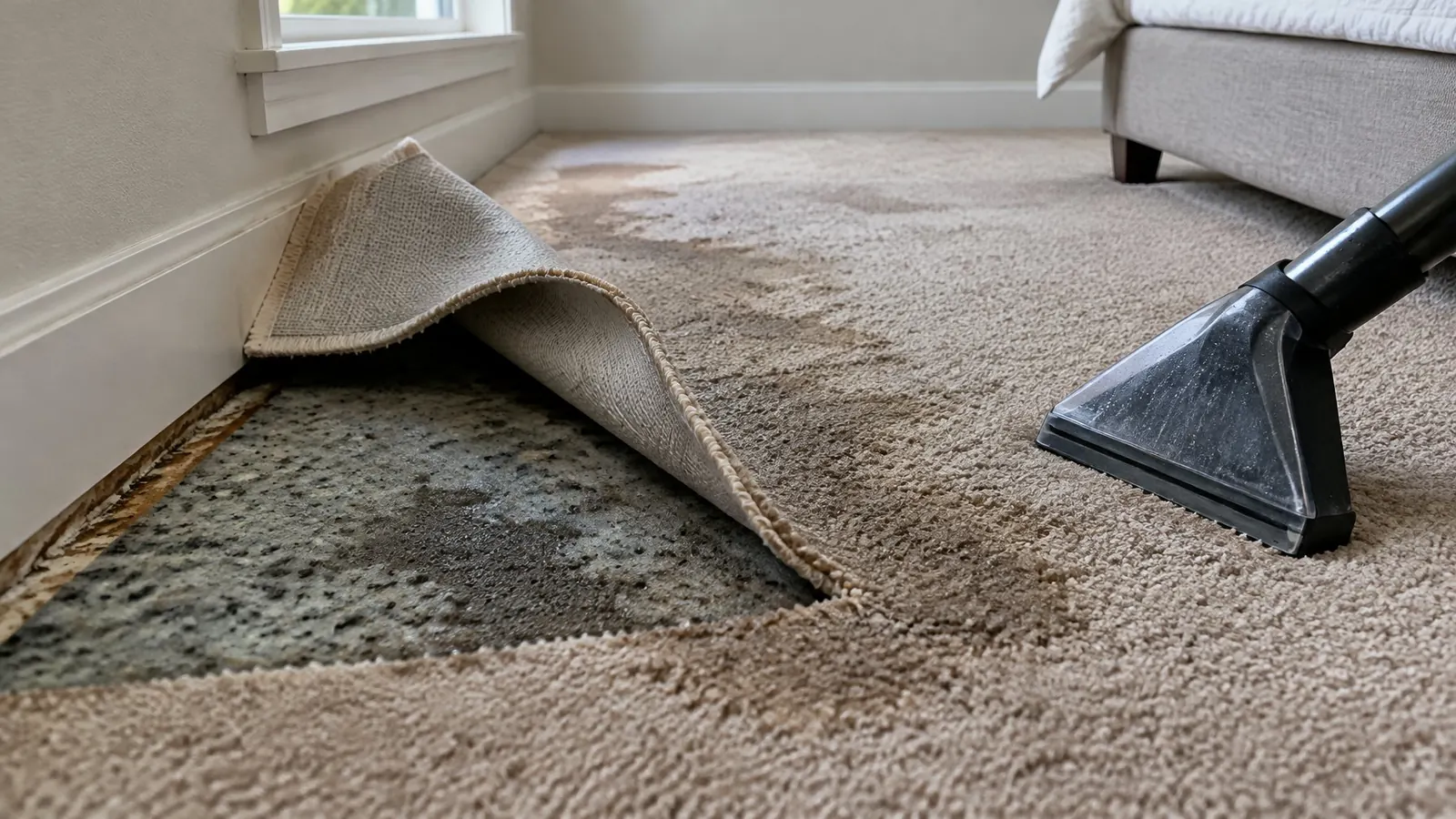
You cannot dry a house with towels, but you can keep the damage from growing.
- Stop the source and make the area electrically safe.
- Blot, do not rub, and lift loose rugs and small furniture off the wet area.
- Do not use a household vacuum on standing water. A wet vacuum made for water is a different tool.
- Open cabinet doors and pull drawers on wet cabinets so air reaches them.
- Keep a log of the time you found the water and each step you took.
How the work usually runs
Extraction comes first. Water is pumped or vacuumed up, and carpet pad that has soaked through is usually cut out.
Drying equipment is then set so that air moves across wet surfaces and humidity drops. The setup changes as materials dry. Contractors return to move equipment and take new readings.
Wet insulation, soaked baseboards and drywall that stayed wet for a long time may be removed. The EPA advises drying water-damaged areas within 24 to 48 hours to prevent mold growth, which is why delay changes what can be saved.
Questions to ask the contractor
- How will you know it is dry?
Ask for moisture readings taken at the start and again at the end, in writing.
- What will come out?
Ask which materials are being removed, and why they cannot be dried instead.
- Who handles permits?
If repairs need a city permit, ask who applies for it. In Kyle, the Building Services office handles permits.
- What does my insurer need?
Ask for photos and a written scope you can pass to the adjuster.
Where this fits in a claim
The Texas Department of Insurance advises making temporary repairs only and keeping damaged items until the adjuster has looked at them. Drying equipment is a temporary measure. Replacing flooring or cabinets is permanent, so ask your insurer first.
The guide on documenting damage lists what to photograph before anything is moved.
After the equipment leaves
Equipment comes out when readings match the dry standard for each material. That standard is set by the contractor, not by this site, so ask what number they used and where they measured.
Over the next weeks, look at baseboards, the edges of flooring and the corners of ceilings. A new stain or smell means a reading was missed. Call the contractor back and write down the date.
Common questions
Are household fans enough?
Fans move air, but they do not take water out of it. Without a dehumidifier the moisture just moves to other surfaces. Contractors use both and check readings on later visits.
Why open a wall if only the floor was wet?
Drywall draws water upward from the floor like a wick. Baseboards come off and small openings let air reach the cavity, so the wall can dry from the inside.
Is the noise normal?
Air movers are loud. They run while materials are drying, and they are shut off once the readings are normal.
Water is still moving. Call now.
One call connects you with an independent restoration contractor who serves the Kyle area. Then you decide what happens next.