Storm and roof-leak damage
Storm and roof-leak damage in Kyle, Texas
Rain that gets in through a roof leaves a stain first. By the time the stain shows, the insulation above it may be soaked.
Connects you with an independent restoration contractor.
What to do before the roofer arrives
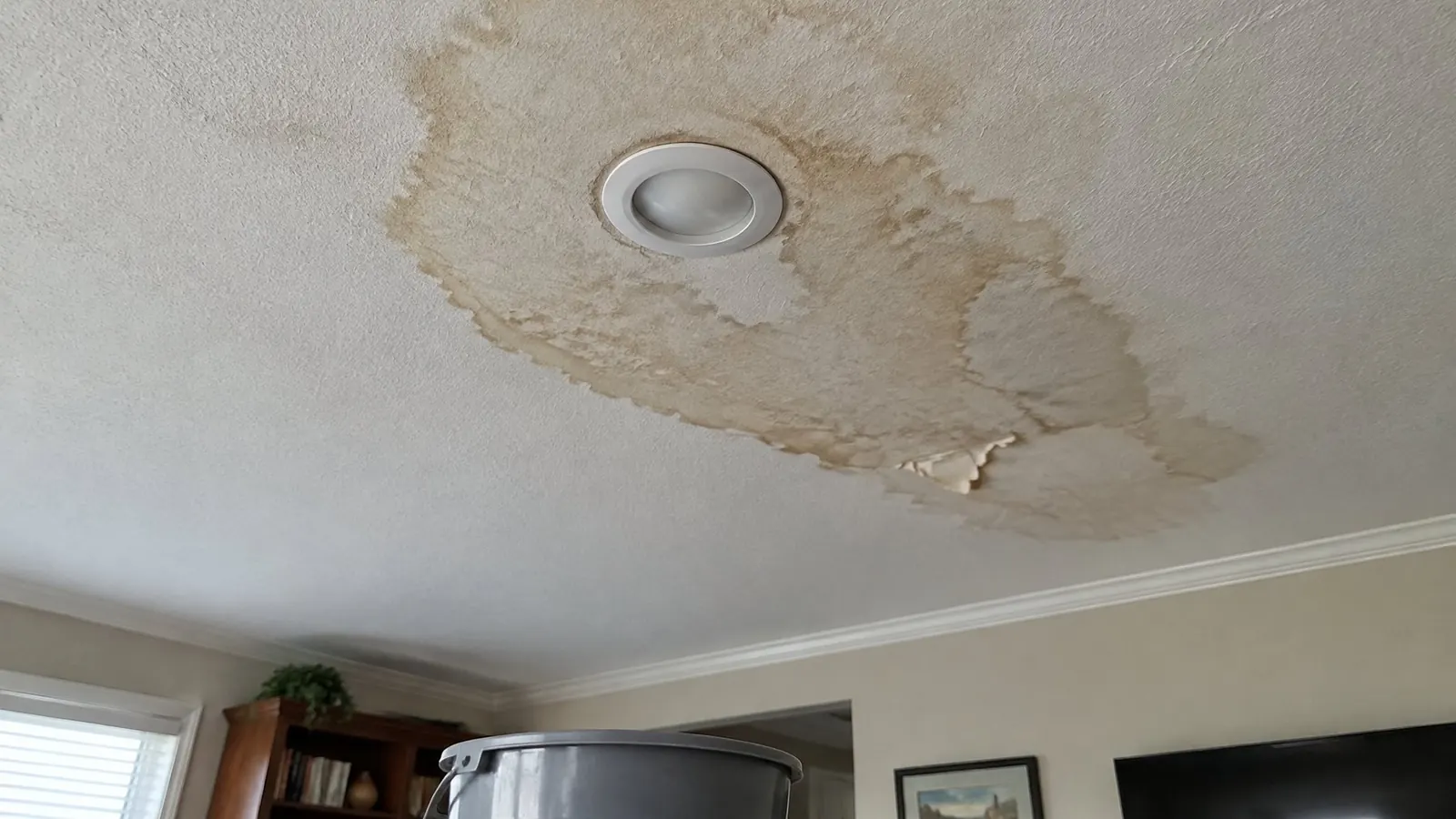
Move belongings out from under the leak and put a bucket under any drip. Photograph the ceiling and the roof from the ground.
The Texas Department of Insurance says it is generally fine to make temporary repairs and that permanent repairs should wait until you have talked to the insurer. A tarp is temporary. A new roof is permanent.
Inside the house
Wet ceiling drywall can sag and drop. Do not stand under a bulging ceiling. A restoration contractor can open it and dry the space above.
The roof itself
Roof repair is a roofing trade. This line connects water damage calls, not roofing work.

Signs that a roof is leaking
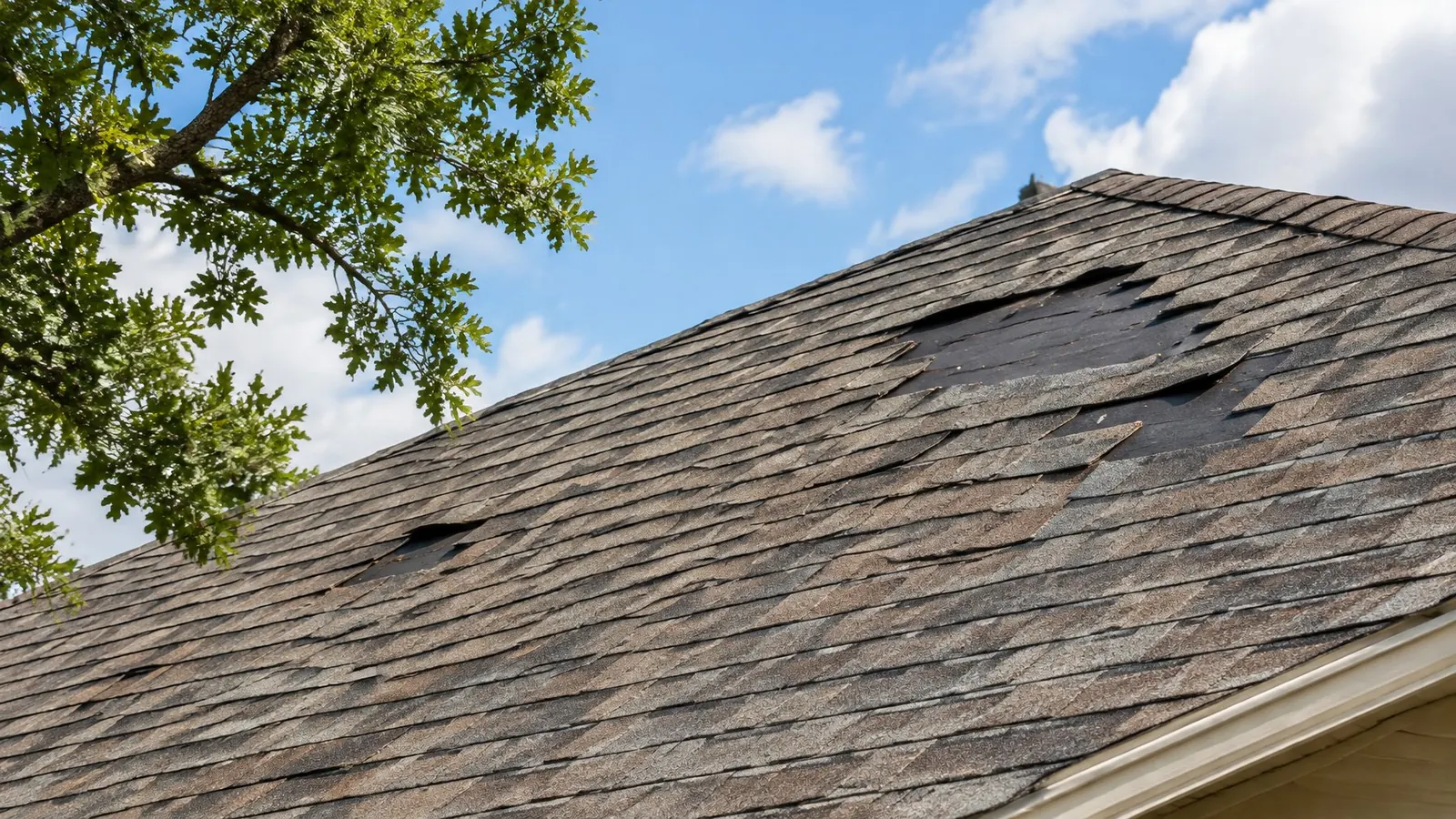
Most leaks show up indoors before the roof looks damaged from the street.
- A brown ring on a ceiling that grows after rain.
- Paint that blisters near a ceiling edge or an exterior wall.
- Damp or dark insulation when you look into the attic with a flashlight.
- Granules in the gutters, or shingles lying in the yard.
- Stains around a chimney, skylight, vent pipe or the point where a roof meets a wall.
What to do while you wait
Photograph the roof from the ground and any shingles that fell. Do not climb a wet roof. Photograph ceilings with something in the frame that shows scale and a date on the phone.
Put plastic under a drip if you cannot catch it with a bucket, and puncture a bulging ceiling only if a contractor tells you how. Water trapped above a ceiling can come down all at once.
Report the loss to your insurer. The Texas Department of Insurance notes that, depending on the damage and where you live, you may need to file more than one claim, and that wind claims on some coastal policies go to a different carrier. For Kyle, a standard homeowners policy is the usual route.
How a claim usually reads
The Texas Department of Insurance lists rain that enters a home through a storm-damaged roof among the water damage a homeowners claim can cover. The roof has to have been damaged in the storm.
Wind-driven rain through a damaged roof is a different story from water that seeps through for months. Insurers look at timing, and TDI notes that you usually have to report hidden damage within days of first seeing it.
What a contractor usually does
A restoration contractor deals with the water inside: a wet ceiling, soaked insulation and the walls below. The ceiling may be opened so the space can dry.
Wet insulation in an attic holds water and loses its value as insulation, so it is often removed. Roof repair is done by a roofer, and the two trades should be coordinated so that new water does not get in while the ceiling is open.
After the repair
Ask the roofer for a written description of what was repaired and keep it with the contractor's moisture readings.
After the next hard rain, look at the ceiling and the attic. A repeat stain means the roof repair missed a path, or that water came from a second source.
Common questions
Can I put a tarp on the roof myself?
The Texas Department of Insurance says temporary repairs are generally fine. Do not climb a wet or damaged roof to do it. A roofer can place a tarp, and you keep the receipt.
Do I file one claim or two?
The state notes that, depending on the damage and where you live, you may need to file more than one claim. For a roof leak, a standard homeowners claim is the usual route.
Will the ceiling dry by itself?
A ceiling with wet insulation above it holds water for a long time. Readings tell you whether it is dry, and the EPA advises drying within 24 to 48 hours.
Water is still moving. Call now.
One call connects you with an independent restoration contractor who serves the Kyle area. Then you decide what happens next.