Wet floors
Wet floors in Kyle, Texas: hardwood, laminate and carpet
Every floor covering handles water differently, and what lies under it matters as much as the surface.
Connects you with an independent restoration contractor.
How each floor reacts
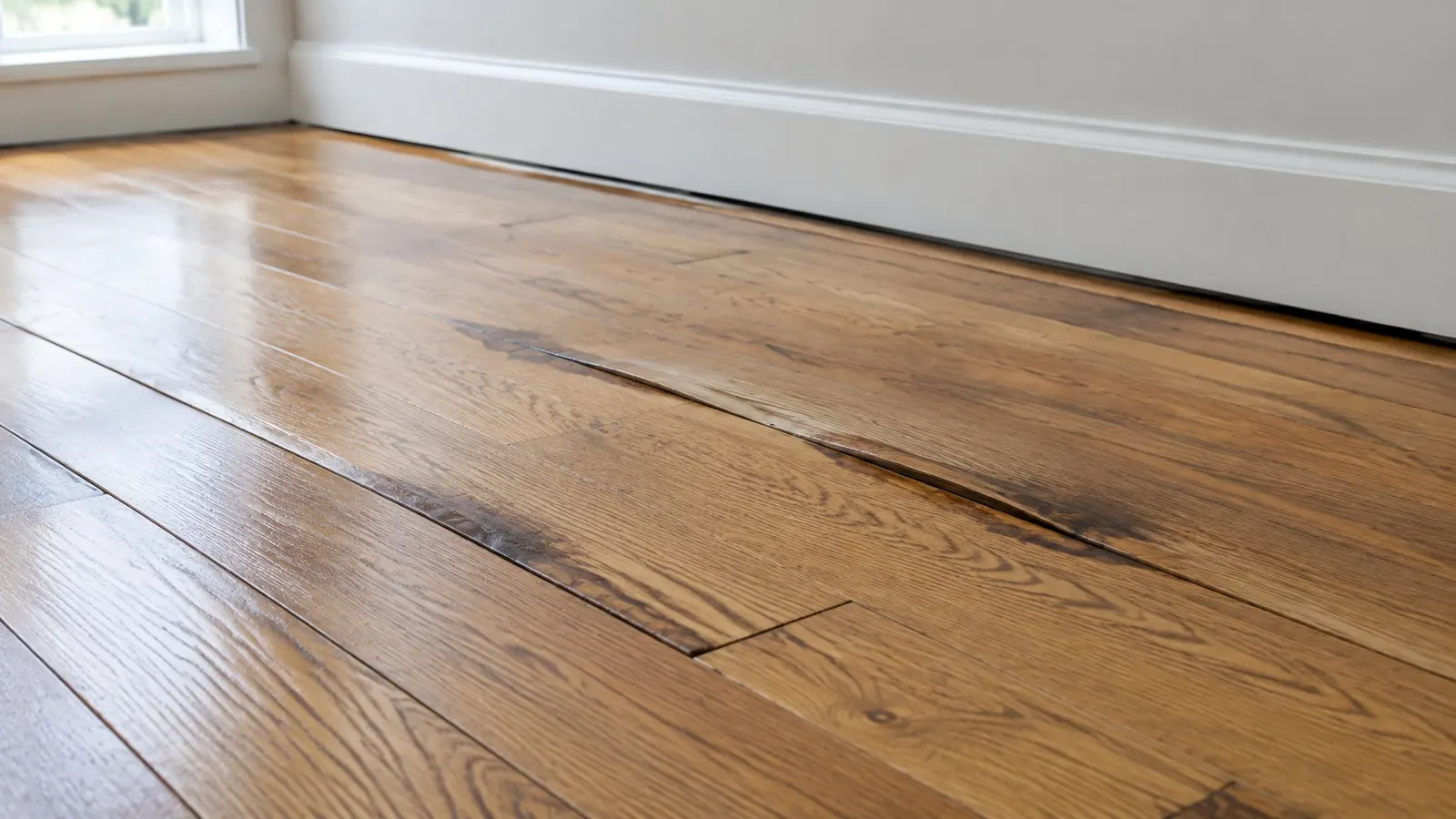
Solid wood takes water in at the edges and the underside. It cups as the bottom swells, and it can crown later as it dries. Engineered wood and laminate swell at the seams and can buckle. Carpet holds water in the pad, which acts like a sponge. Tile survives water, but the grout and the material under it may not.
Hardwood
Boards may cup, gap or darken. Whether they can be dried in place depends on how long they were wet and what is beneath them. A contractor reads moisture in the boards and the subfloor before deciding.
Laminate and engineered wood
Edges swell and the surface lifts at the seams. Laminate is usually a replacement, because its core is a wood fiber board that does not return to shape.
Carpet and pad
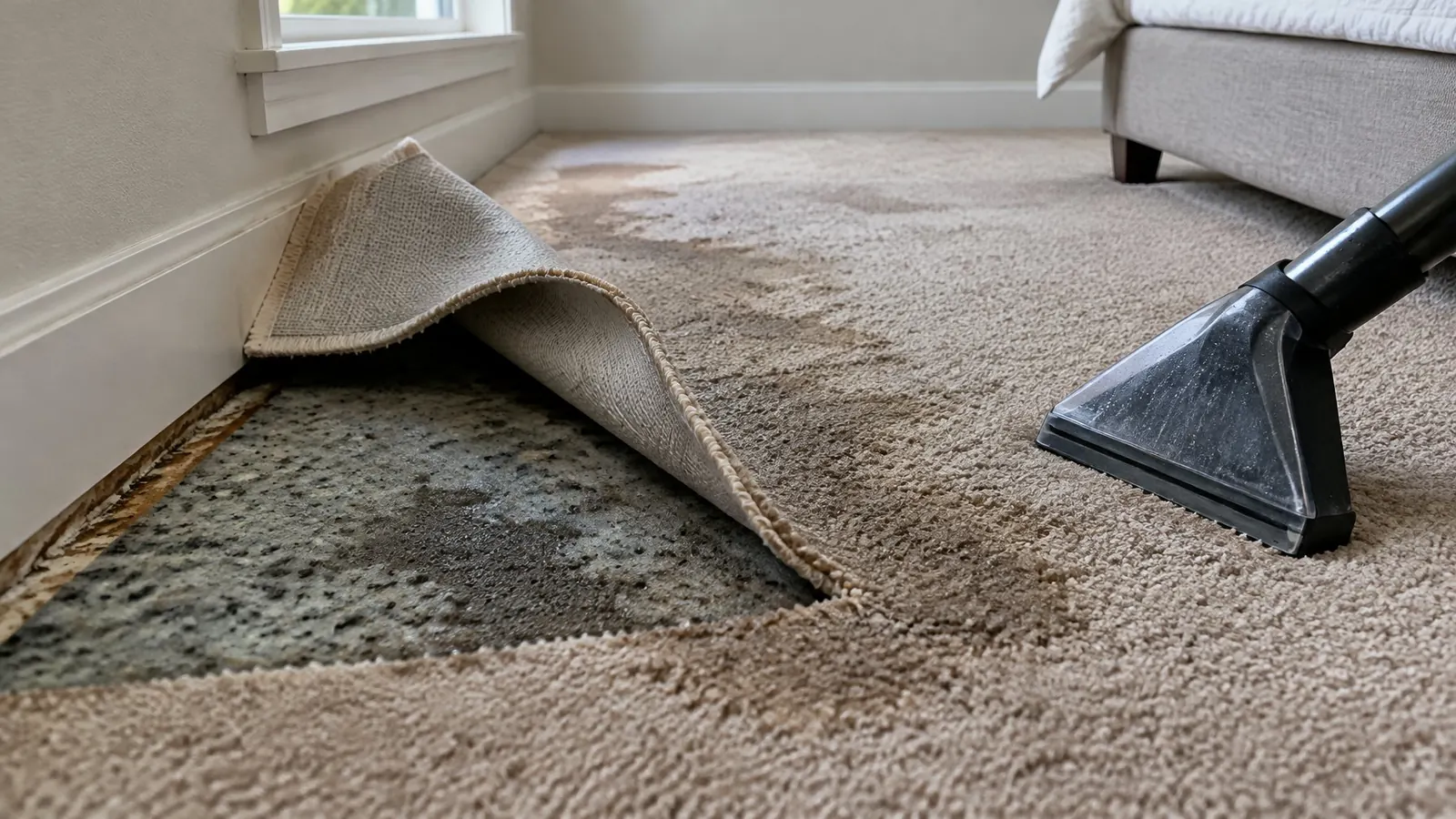
The carpet itself may be dried in place if the water was clean and recent. The pad is often discarded since it is difficult to dry and simple to replace.
Tile and vinyl
The surface is waterproof. Water can pass through grout, seams or gaps and soak the subfloor, so a tile floor that is warm or hollow-sounding may hide a problem.
Signs to look for
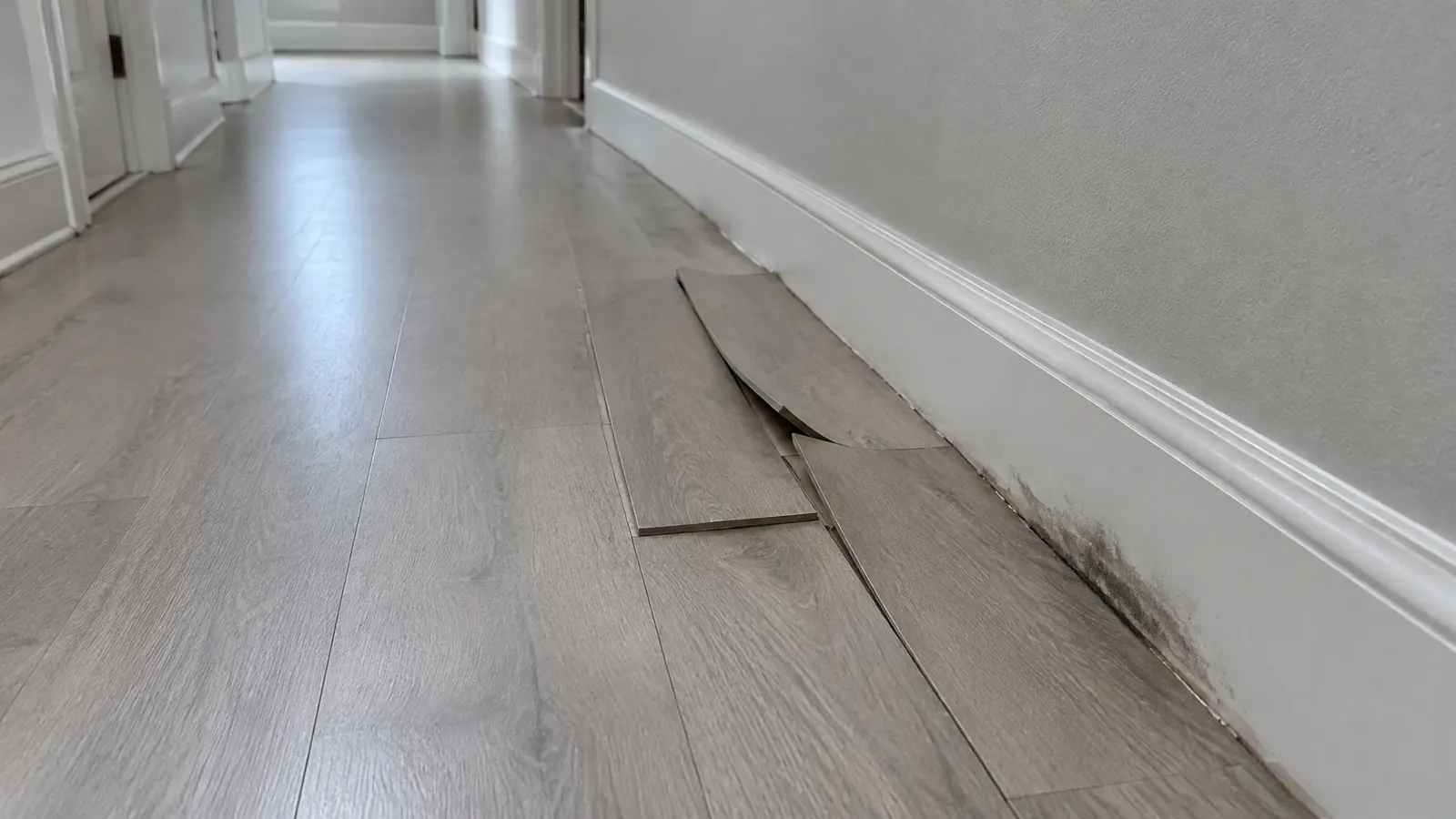
Floor damage often begins at a wall, a doorway or an appliance.
- Planks that lift, peak or feel springy underfoot.
- A dark line along the edge of boards.
- Carpet that feels cool, damp or squishy after a day.
- A musty smell from a room that looks dry.
- Tile that is warm in one patch, which can point to a hot water line below a slab.
- Cracks or gaps that open in grout lines.
What to do while you wait
Stop the source and make sure the area is safe to walk on. Pull rugs and furniture off the wet floor and put foil or plastic blocks under furniture legs that must stay.
- Wipe or vacuum standing water with a wet vacuum made for it, not a household vacuum.
- Keep foot traffic off wet hardwood and laminate, which weakens as it swells.
- Lift the edge of wet carpet only if it is safe and you can see underneath. Keep the pad for the adjuster unless it is contaminated.
- Turn the air conditioner on and run fans, but avoid heat on hardwood, which can dry the top faster than the bottom.
- Photograph every wet area, the source and any lifted boards.
What a contractor usually does
Contractors read the surface and the layer beneath it. They extract standing water, cut and remove wet carpet pad, and set air movers and dehumidifiers. On wood floors they may set a specialized drying mat or panels that pull moisture through the boards.
Readings are repeated every visit. The decision to keep or replace a floor is made from the readings, not from how the floor looks that day.
The EPA advises drying water-damaged areas within 24 to 48 hours, and porous materials such as carpet may need to be thrown away if they become moldy.
How insurance tends to read a floor claim
Sudden and accidental water damage, such as an overflowing toilet or a broken washer hose, is the type most Texas policies cover, according to the Texas Department of Insurance. A floor that was damp for weeks under an appliance falls into the continuous-leak group that policies usually exclude.
Flood water from outside is a separate matter. Home policies do not cover flood, and the flood policy is a separate policy with a 30-day waiting period.
Keep a sample of damaged flooring and the manufacturer information if you have it. The adjuster may ask for both.
After the repair
A floor that was dried in place can still cup or gap over the following weeks. Wood needs time to settle after the water leaves. Keep notes and photos of changes, and tell the contractor if boards keep moving.
New flooring should wait until readings are normal. Installing over a slab or subfloor that is still damp traps moisture below the new surface.
Water is still moving. Call now.
One call connects you with an independent restoration contractor who serves the Kyle area. Then you decide what happens next.