Ceiling leaks
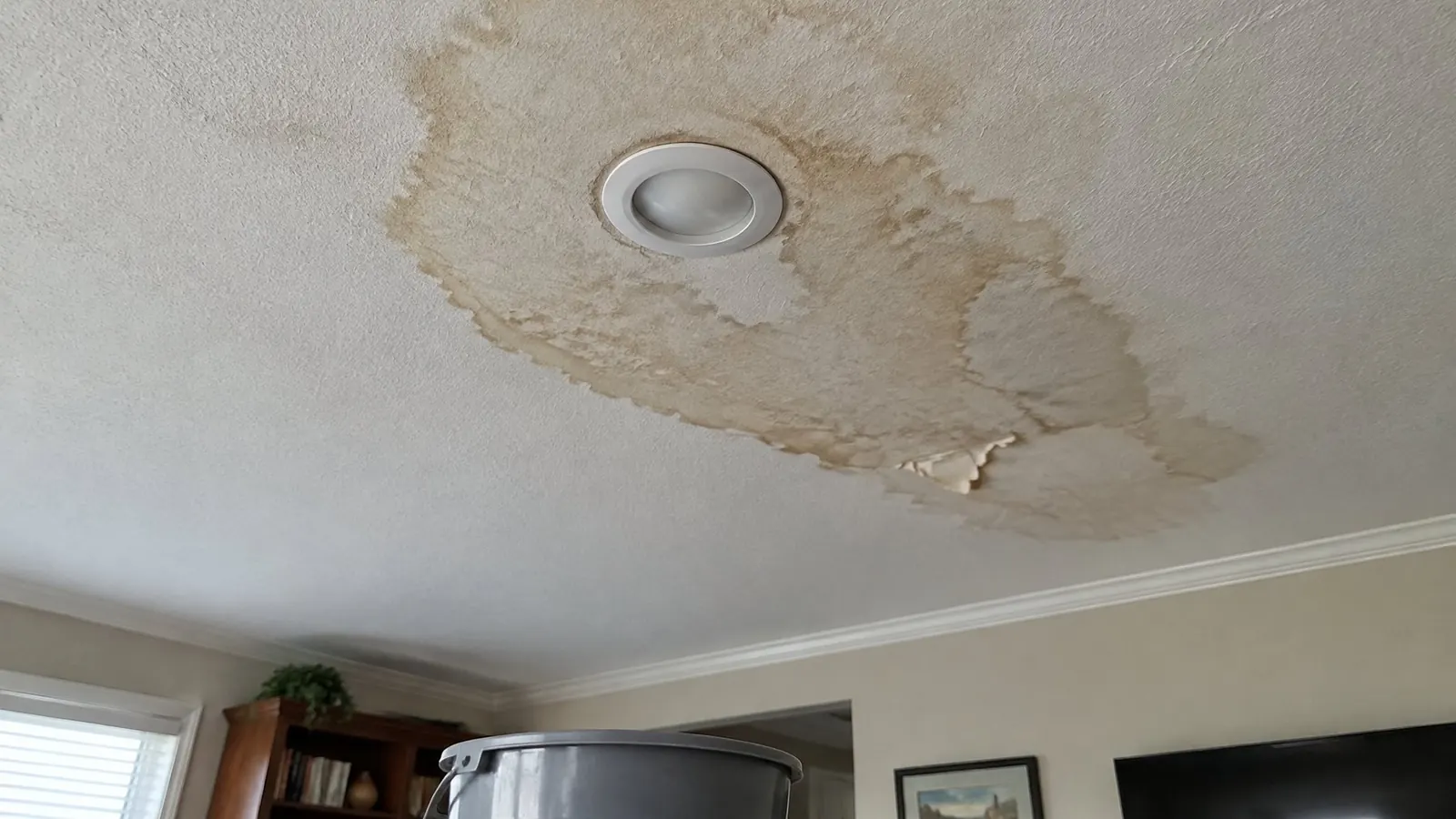
Ceiling leak or water stain in Kyle, Texas
A ceiling stain is a message from somewhere else. The water that made it came from above, and it is often still moving.
Connects you with an independent restoration contractor.
What the ceiling is telling you
A brown ring means water has soaked through and dried, then soaked again. A fresh stain is yellow or gray and may feel cool. A bulge means water is held by the drywall and has nowhere to go.
Where the stain sits helps narrow the source. Near an exterior wall or the roof line points up and out. Under a bathroom points to a drain or a supply line. Near an air vent points to the air conditioning system.
- Single stain that grows after rain: roof, flashing or a vent pipe boot.
- Stain below a bathroom or laundry: supply line, drain or an overflowed fixture.
- Stain near a vent or the air handler: a clogged condensate line, a full pan or sweating ducts.
- Stain after a freeze: a split line in the attic or an upper wall.
- Stain with no rain, no fixture above and a rising water bill: a slow leak in a hidden line.
What to do right now
Safety first. A ceiling that holds water can fail. Keep people away from the area below it.
Water in a ceiling light fixture is a shock risk. Turn off the switch and the breaker for that circuit from a dry location. Do not turn the light back on to test it.
- Move furniture, rugs and electronics out from under the stain.
- Place a bucket under a drip. Use plastic sheeting under a large bulge.
- Photograph the stain with the date visible, then again every few hours if it spreads.
- Mark the edge of the stain with a pencil so you can see if it grows.
- If water is running from a pipe, close the nearest shut-off or the main valve.
- Do not poke a hole in a bulging ceiling unless a contractor tells you how. If you must relieve it, do it from the side with a bucket below and wear eye protection.
Find the source before you paint
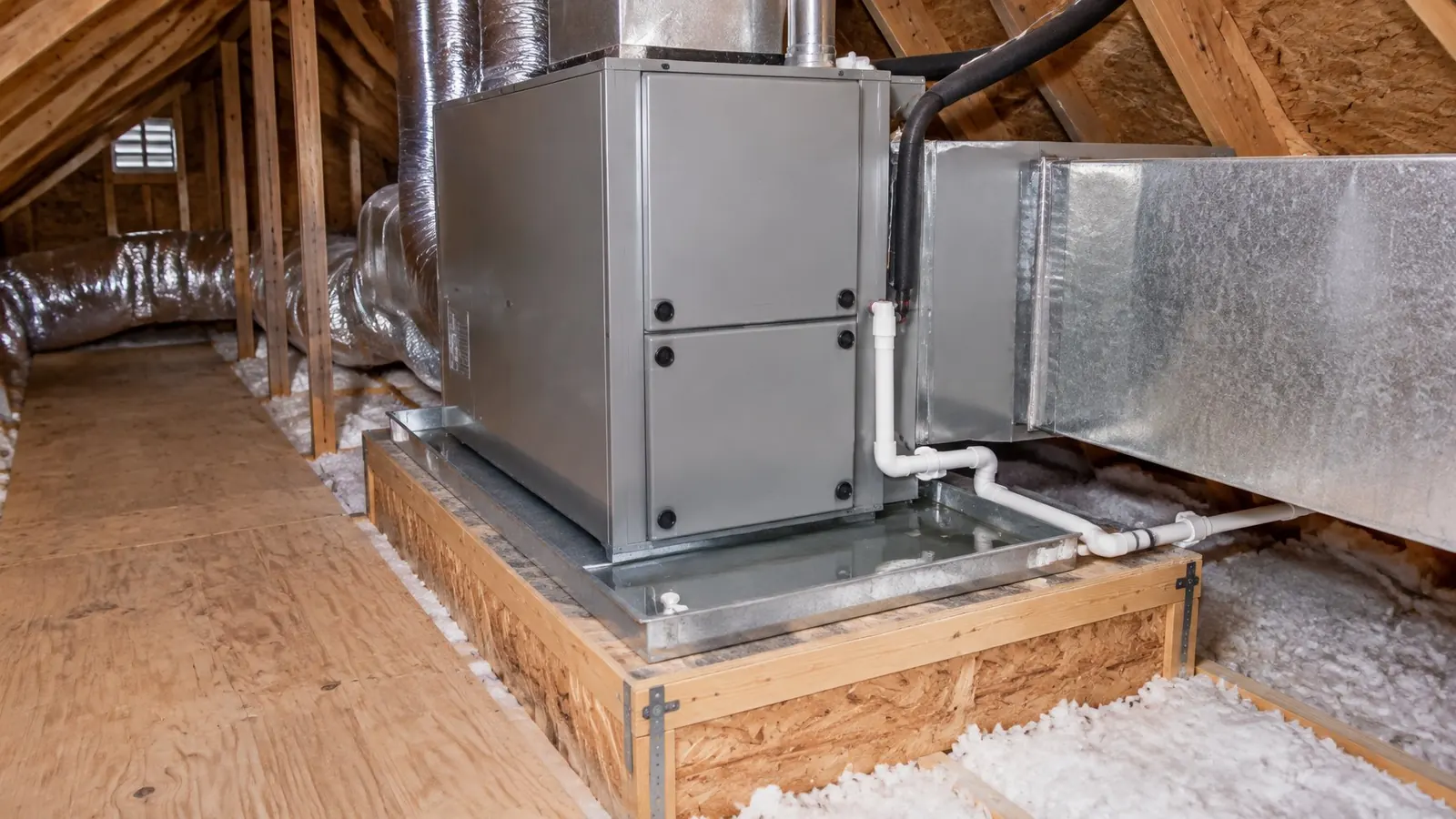
Painting over a stain hides it and does nothing to stop the water. The EPA links roof leaks and hidden moisture above ceilings to mold, and says to fix water problems as soon as possible.
A plumber finds supply and drain leaks. A roofer handles roof leaks. An air conditioning technician handles a condensate line. A restoration contractor handles the wet material in the ceiling and the space above it.
What a contractor usually does
The contractor takes readings on the ceiling and the walls around it. If the ceiling is wet or sagging, the drywall may be cut open so insulation can be removed and the cavity can dry.
Small holes or a cut section are common. They are easier to patch than a ceiling that stays damp. Ask what will be opened and what the repair will look like afterward.
Wet insulation above the ceiling is usually removed because it holds water. Air movers and dehumidifiers are then set below and sometimes above the ceiling plane.
How insurance tends to read a ceiling leak
The Texas Department of Insurance says sudden and accidental water damage is the type most home policies cover. Rain that enters through a roof damaged in a storm is on its list of covered losses.
A stain that built up over months is a harder claim, because policies usually exclude continuous leaks. The date you first noticed the stain, and the photos you took, matter. TDI says hidden damage generally has to be reported within days of when you first see it.
After the repair
Wait until the ceiling is dry and the source is fixed before repainting. Stain-blocking primer is cosmetic and does not replace a repair.
After the next rain, look at the repaired area. If the ring comes back, tell the roofer or the plumber and your contractor. Keep the photos from the first stain as a comparison.
Water is still moving. Call now.
One call connects you with an independent restoration contractor who serves the Kyle area. Then you decide what happens next.